So much fashion content, so little to take away
Congratulations on getting paid I guess?

I fell out of the loop with capital-F fashion for a bit. It wasn’t on purpose, it just felt like after an explosive sequence of creative director debuts last fall, they locked into their respective corporate hamster wheels and pumped out a show after a show after a show, iterating on the same to-be-signature aesthetics. Men are walking women’s, women are walking men’s, the looks are “wearable,” androgynous, and skinny. One week all eyes are on LA, next week we are (smartly) in Shanghai, then off to New York, Milan, Paris. Is it couture? Men’s? Women’s? Cruise? A random show off schedule? Once skeptical of influencers, fashion now moves like one — always on and clout chasing, desperate to get and hold your attention.
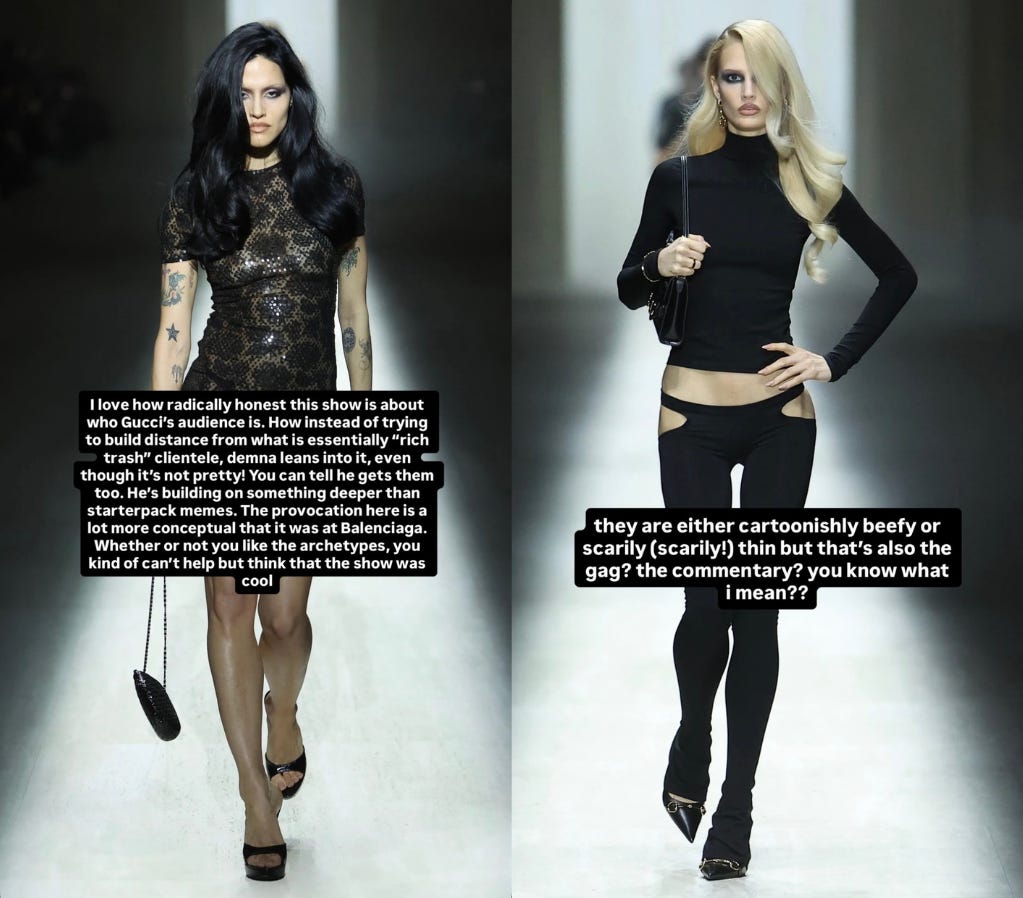
Talking about capital-F fashion in the context of culture at large is hard because it isn’t trying to say much. The only mildly intriguing conversation since last fall circulated around Gucci’s character building, specifically after the Primavera show. It made an interesting statement: while the rest of the industry continues to downplay the fact that most of its revenue comes from morally questionable VIPs, Gucci put its rich trash clientele centerstage. With no verbal commentary from Demna, it was fun to speculate whether he found his repulsive cast playful and ironic or genuinely fascinating. The Times Square show, as grandiose and indulgent it was (talk about leaning into capitalism as a bit), sadly suggested the latter.
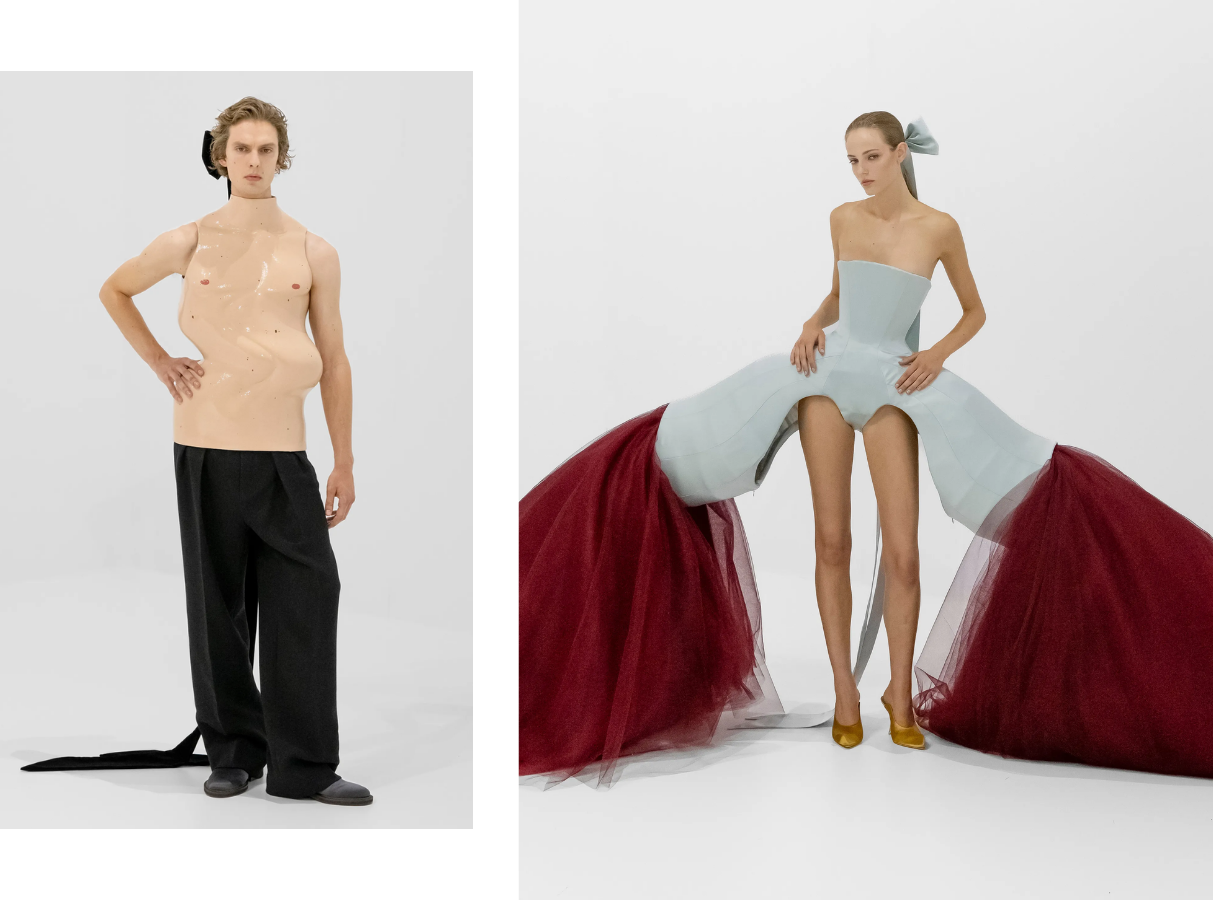
The rest of the buzz congregated around edgelord brands casting hateful, and ultimately boring, characters in their shows and campaigns which seemed to have worked out great for everyone: commentators got to throw easy punches for views, edgelords got the cheap attention fix they were looking for. After a much hated Jean Paul Gauthier debut that featured a hairy male nude printed on a skin-tight body suit — lazy and way underthought commentary on gender and beauty standards — Duran Lantink sadly let the crowd beat him into submission instead of learning how to sharpen his provocations. His couture debut that looks like something crafted in a lab rather than an atelier, seemed to have won back the fashion folks’ favor. If the people who warship Hedi Slimane and Tom Ford in retrospect, were their contemporaries, I am convinced they’d actually been their biggest haters.
Pretty much every big designer in the industry is busy building their own universe — joyful, meticulous, inoffensive. A lot of it is beautiful — textures, techniques, and illusions that make you move closer to the live stream and peek into store windows. On paper, creative directors and their teams are tapped into culture, dressing underground musicians and hot actors for magazine covers and red carpets. Luxury brands have inserted themselves everywhere — movie screens, stadiums, art fairs, book clubs — and are making a bank off the crowds lining up for bags and pony hair flats, as well as VIPs. And yet, they can’t seem to pierce through celebrity and influencer circles and actually move culture because the truth is, they don’t need to do so to make money.
That’s fine! Big fashion is commerce, and I too want that perfectly fitted Gucci jacket and a pair of cool jeans that hug my hips. Since shopping luxury fashion directly is so inaccessible, it feels like more people are looking at the runway for styling ideas and fun accessories rather than new, exciting silhouettes anyways. I guess it’s better to have corporate fashion teams reimagine neck ties and sandals than larp as serious culture institutions. Funding museums and giving out free books is cool, but let’s not act like some sort of significant culture conversations are happening at a panel talks inside of a brand activation.
Engaging with this version of fashion as a hobby or dreaming about partaking in it feels really awkward because it’s so disconnected from everything else. Getting back into skinny jeans because you saw them on the Prada runway, and not because you are into a certain kind of music or hanging around a certain crowd is kind of corny. In my mind, fashion is something you pick up from obsessing over art and acting a fool in the streets, not passively scrolling through a feed. When your favorite filmmaker or writer gets a big fashion check now, they rarely get to actually make or be a part of something creative. All they do is post photo dumps from shows and tolerate a bunch of tiny mic questions, and I am increasingly unsure how brands expect us to engage with that — congratulate them on getting paid?
There is so much fashion content, yet so little to take away. Very few insiders and magazines even bother to say anything — they snap a few clips to post on social, maybe force a few lines for a sponsored web piece, and move on with their weeks. Big players are making it clear — fashion is a business. Why not believe them?
IN THE MARGINS
I finally got around to watching Erupcja and liked it a lot more than expected. I’ve heard Jeremy O’Harris say a few times that his favorite part about Pete Ohs as a director is that he just goes and makes movies that he can make instead of waiting for a certain kind of budget or opportunity to come around. The way Erupcja was shot made me want to get up and make something.
I unfairly assumed that The Hellp were pretentious pricks for years until I came across one of their interviews and realized they are actually chill, smart dudes. There is a video series on Freeform about Noah Dillon’s and Luka Sabbat’s art studio (?) from 2018 that made me laugh, what a time capsule.
Memory NYC is hosting a pop-up at Climax Books and while I am not particularly sold on the clothes yet, there are lots of cool packaging and branding details to get inspired by there.