

Can Fashion People Make Good Movies?
Checking in on Saint Laurent Productions, the Gucci short, and art as marketing

Luxury fashion has long flirted with film — although most of the time, these engagements haven’t gone much further than commercial designers stepping into costuming roles and star directors accepting handsome checks to make cinematic commercials. A couple of famous designer-director duos, à la Sofia Coppola and Marc Jacobs, have grown into long-term creative collaborators that influence each other’s ideas across their respective mediums, but very few fashion people have been ballsy enough to produce their own features, like Tom Ford and the Rodarte sisters. That is until 2023, when Saint Laurent outdid them all by becoming the first ever luxury fashion house to open an integrated film studio.
Despite producing mostly wacky European flicks, the brand has quickly established notable presence at esteemed international film festivals. It burst into Cannes with a Western short, starring Ethan Hawke and Pedro Pascal, and three feature films, one of which, Emilia Pérez, went on to score a whopping 13 Academy nominations last year although it’s been deemed largely unwatchable by both viewers and critics. Based on reviews, it is actually Paolo Sorrentino’s Parthenope that is a relative standout among all the projects Saint Laurent has produced so far — a stylized film that follows an irresistibly beautiful young woman as she stumbles aimlessly through life, cutting from provocative intimate scenes to poetic conversations that sound profound but carry little meaning.

All in all, Parthenope boils down to an old Italian man’s long-winded meditation on the corruptive powers of beauty and youth. But if you manage to tune out the casual misogyny that pulls it together, perhaps by reminding yourself that the whole thing is supposed to double as commentary on the city of Naples and its people, you are in for a scrumptious visual feast: breathtaking seascapes, rich interiors, and magnetic closeups of the lead actress smoking in distress. It’s the type of cinematography that earned films, like Nocturnal Animals, “two-hour perfume commercial” allegations, but at least in that regard Parthenope is honest. The opening credits make it clear — it is a two-hour commercial for Saint Laurent.
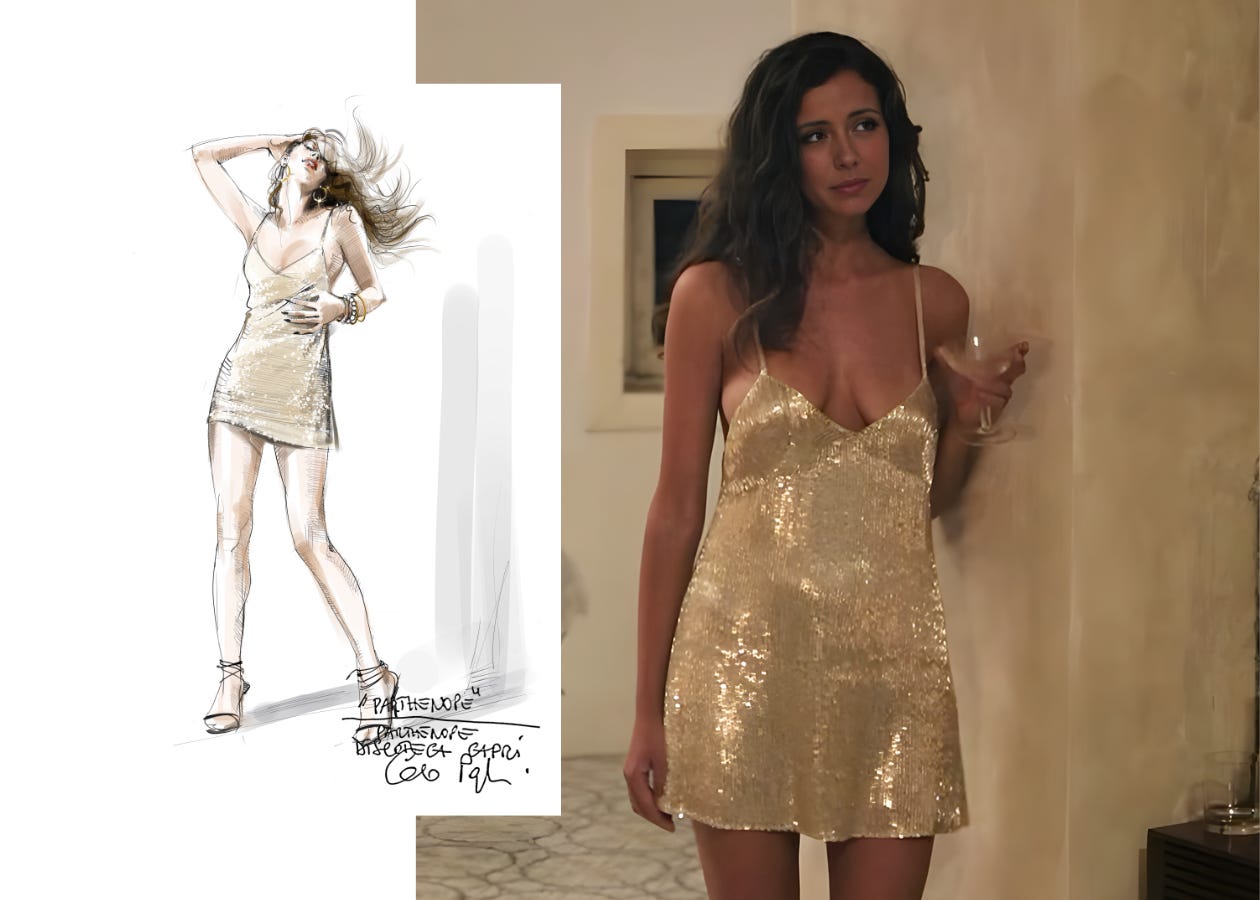
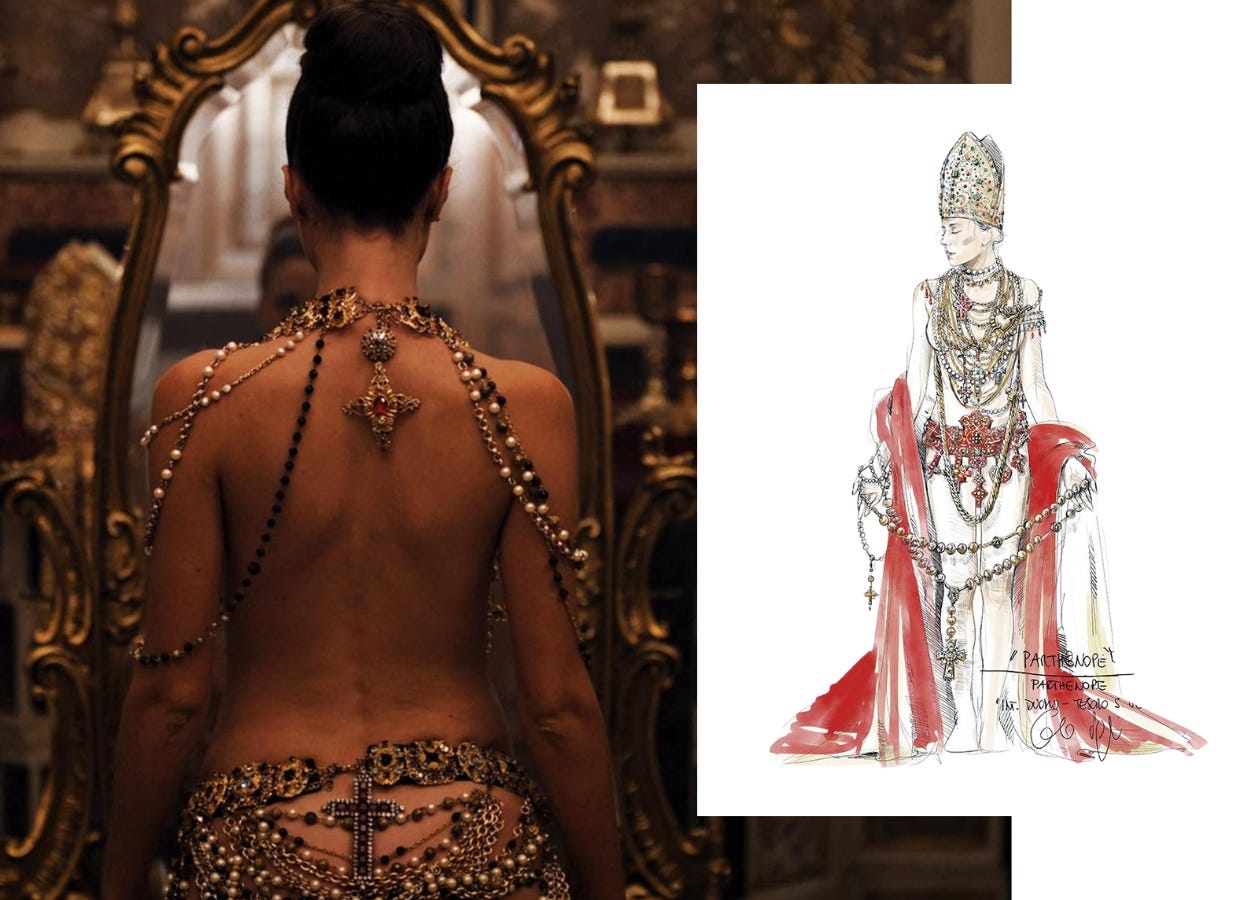
From the flirty silver dress in embroidered silk that the protagonist wears the day of the most tragic event of her life to the rich jewel number she puts on in a provocative scene with an old Catholic bishop, the selection of costumes produced by Saint Laurent comes close to dethroning the lead actress as the most desirable in the film. Certain scenes literally feel like 3D magazine spreads where the background folks are posing rather than acting — director’s choice, surely, and an interesting one, but still disorienting to see in a film.
Ultimately, the reason why the film doesn’t work though isn’t because it’s produced by Saint Laurent — in fact, this could have been a perfect pairing, given how well the film’s undertones of indulgence and temptation align with the brand’s cultural universe without making it the focal point of the project. It’s the narrative of the film that is to blame for making it feel so painfully outdated and boring.
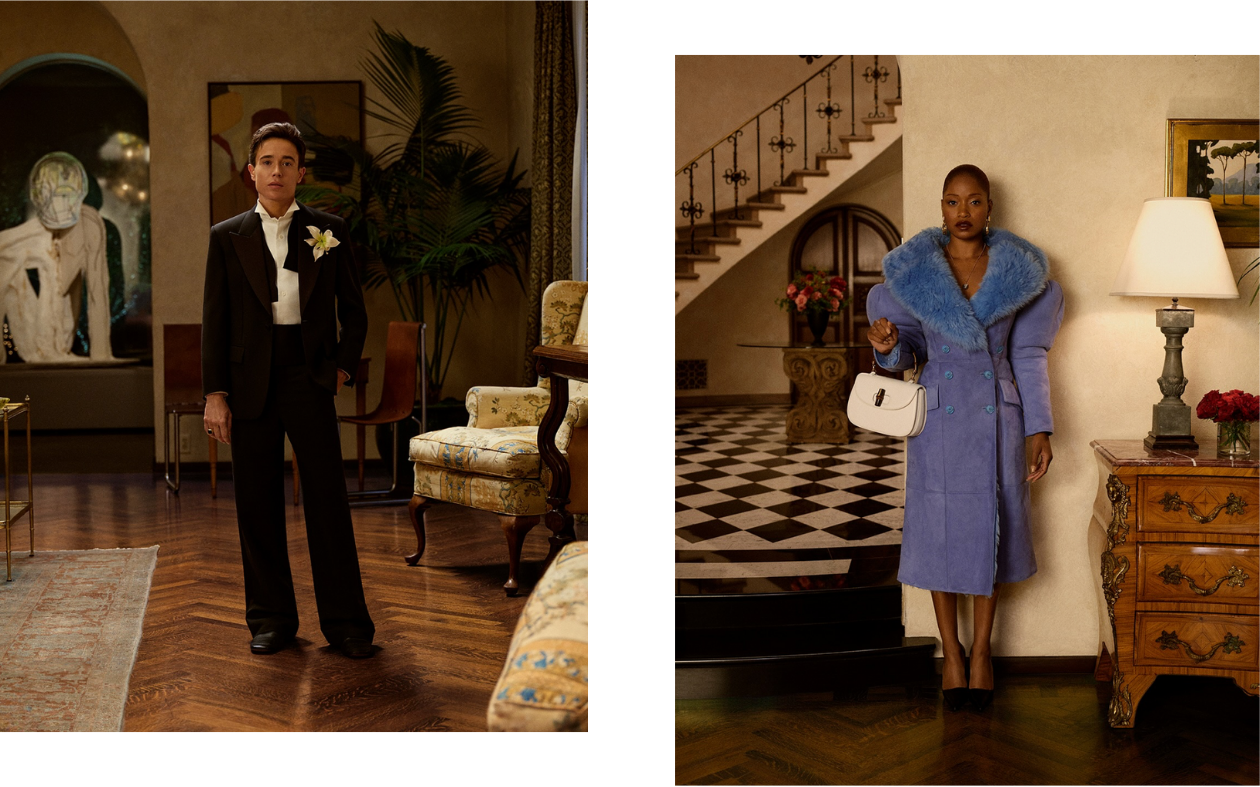
Fashion’s growing interest in filmmaking and entertainment overall isn’t an inherently negative trend either. When Demna threw a surprise screening of The Tiger, a Gucci short directed by Halina Reijn and Spike Jonze, to celebrate his inaugural collection for the house last year, it cut through the noise of a debut-heavy news cycle and gave the guests opportunities to capture and share something other than clips of models walking down the runway. It’s ironic how a classic rollout structure that does very little for the industry that invented it anymore can feel so refreshing in the context of a different crowd. If traditional fashion shows generate impressions by putting actors in front row seats, The Tiger flipped the script by inviting models to watch actors do their thing.
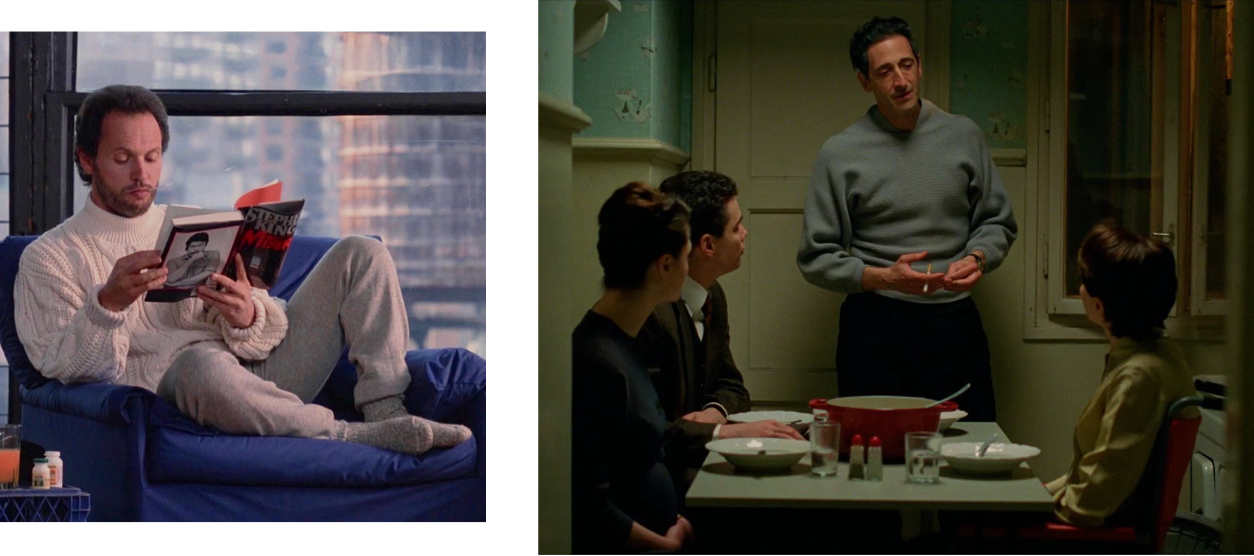
Meanwhile, on the film side of things, there’s been an unusual amount of chatter around costume design and even filmmakers’ personal wardrobes. In the past few years alone, we’ve seen critics and audiences across industries obsess over the costuming choices in films that are intentionally campy, like Poor Things and Pricilla, restrained but stylish, like Challengers and Marty Supreme, and fashionably nostalgic, like Party Girl and When Harry Met Sally. The Director Fits interview series where renowned and up-and-coming filmmakers — Francis Ford Coppola, Eva Victor, Joachim Trier — come on to talk about their personal style and relationship with fashion, has become a fun press cycle stop to consider for the film folks aiming to reach a broader culture-savvy audience. Similar to stylists, costume designers, like Heidi Bivens and Miyako Bellizzi, are reaching celebrity status, and the hype around certain movie merch may be surpassing the hype around the actual movie it’s designed to promote.
Regardless of whether you make clothes or movies, the most effective way to market them in such a crowded and fragmented media landscape is to build alliances and create entertainment that is able to reach audiences outside of the immediate industry circles. People who don’t keep up with the creative director shuffle in Paris, no longer discover brands and styles from magazines and department stores — they want the flared jeans that Kendrick wore to the Super Bowl, the sweater from The Brutalist, and the cropped puffer jacket from the cover of West End Girl. Similarly, few people decide on a movie to watch once they arrive at the box office or when they drive past a billboard on Sunset Blvd. Most show up with a digital ticket to something they heard rave reviews about from the people whose taste they trust across categories — lifestyle podcast hosts, bookfluencers, fashion newsletter writers. That is, if they show up at all.
”Merchandise is often framed by external context: who shared it, where, and what else it appeared alongside,” writes Rebecca Jarrett in her latest newsletter. “Brands are no longer just selling stuff; they are situating their wares within a constellation of references their consumers already recognize, own, or aspire to…these surrounding cues don’t compete with the product, they stabilize it — signaling where it belongs.” At the same time, artists are happily accepting brand deals to fund their lifestyle while they work on meaty film projects that are less and less commercially viable. Letting brands patron the arts and in the process, reap a little benefit of associating their products with interesting people and projects feels like a net positive — or at the very least, a better alternative to having their own teams burn the cash they are hoarding on unimaginative activations and content.
The only issue is that when corporations say they want to work with artists, what most of them actually mean is they are interested in the attention and status they posses, some are just more open about it than others. In the end of the day, fashion, and more specifically, luxury fashion, is commerce, which means there isn’t much room for emotions outside of joy and delight. In a twisted way, even some of its grungier, weirder choices, are supposed to be pleasurable — no one buys bags and shoes if you put them off too much, take how people en masse, and even some industry insiders, reacted to Margiela’s SS26 mouthpieces as an example.
After all, there is a reason why people, like Tom Ford, who excel in both art and commerce, prefer to draw a line between the fashion and film projects they touch. “I am a commercial fashion designer, I design clothes to sell. It’s an artistic thing but it’s not necessarily, for me, art,” he explained in an old interview about Nocturnal Animals. “Filmmaking for me is the most expressive, personal, the closets thing to art that I can create.” After nearly four decades in fashion, Ford exited commerce to make movies full-time. But chances are, when his new film comes out, he will still be moving in the same circles as his former employers.
IN THE MARGINS
Academia scenes and looks in Parthenope reminded me of this atmospheric video by Paloma Wool. Oh to be a Spanish uni student!
Also loved this silly video by Olga Basha. Kristoffer Borgli who directed Sick of Myself, Dream Scenario, and upcoming The Drama, is a background actor.
I’ve been also watching skate videos.
I just watched Parenthrope and I’m not to sure how I feel about it. I’m going to watch it a second time because there is so many layers to unravel in it. I was looking for anyone else who had some commentary on it so thank you! 🩶
Particularly I’m enjoying this intersection of film and luxury fashion. Parenthrope was so aesthetically pleasing and at stimulating almost forgot that I started watching it to investigate its themes lol.
This was so interesting! Never realized there were so many fashion people making their foray into film. I really appreciate when a film has the right aesthetics, so I hope they can get the narrative right one day too.